
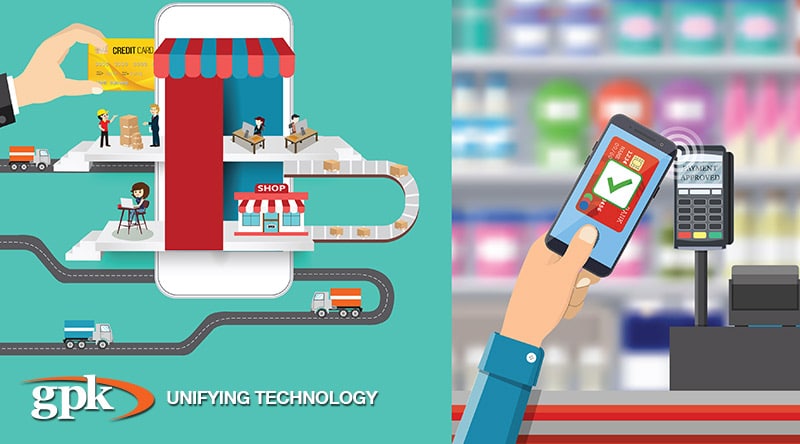
Mobile Device Integration: the key to streamlining your business and a better customer experience

Today more than ever before, the customer is king. In the retail sector, e-commerce has risen to the challenge, leveraging mobile technology to offer speed, agility, and convenience. But the in-store experience is also evolving, as bricks and mortar retailers recognise the many opportunities this same technology affords both their staff and customers.

Choosing the right systems and devices for your store begins with understanding your customer and their growing preference for omnichannel shopping. For many, the buying journey has already begun before they visit your store, and the majority will enter the store with a smartphone in hand.

What they experience from this point forward is critical to your sales success.

Customers expect a digitally sophisticated experience. Research shows bricks and mortar stores that deliver a seamless online-offline experience enjoy a distinct advantage which directly benefits their bottom line: customers feel more engaged, making them willing to travel further to your store, pay higher prices and buy greater quantities.

It might be tempting at this point to focus on technology as the key to profitability. But what distinguishes you from e-commerce competitors, and can ultimately be used to your advantage is your ability to deliver this experience with the right balance of people and technology.

The solution? Mobile device integration.

Here are some areas of technology where integration can help you streamline your systems and devices to save time and money, and deliver a better customer experience:

Multipurpose devices

Rather than having a swathe of clever devices that perform individual tasks such as stocktake, markdowns, and compliance, choose multipurpose devices that perform several functions. A great example is 1D/2D scanners, which are capable of scanning two types of barcodes – so you can use just one scanner for multiple tasks including POS, loyalty cards, redemptions and marketing.

These scanners can be installed at the checkout and on phones and tablets used by floor staff, giving customers the convenience of making a purchase or obtaining product or promotion information directly on the shop floor, rather than waiting in line.

There is also a range of handheld devices available in a ‘rugged’ or hardwearing format, which can be useful if your store environment is particularly demanding or requires staff to carry the device for long periods.

Operating systems

Implementing a widely used operating system such as Android, which has a range of applications and plugins readily available through the Google Play store, gives you the flexibility to grow and adapt to your business needs and customer demand.

Android is compatible with Windows-based systems, so it can be used on a large range of devices. It’s open source, making it fast and economical for you to tailor the system to your unique needs. And its compatible with popular e-commerce sites such as Myfoodlink, helping you to streamline tasks like picking and stock control.

Wi-Fi

Wi-Fi is an integral part of the retail environment – not just as a convenience for customers doing in-store price comparison or product research, but to enable data sharing and syncing between live systems, access to remote support and to help staff provide responsive customer service face to face and via social media.

Today’s consumers have an abundance of information and resources at their fingertips. Digitally savvy and time poor, they have high expectations of retailers. But retailers can meet this challenge head on and leverage it to achieve better customer service and more sales by taking an integrated approach to in-store technology. With a combination of the right devices and tools, and a willingness to empowering staff to deliver on the spot solutions, retailers can satisfy their customers’ thirst for congruency and in return, enjoy long term growth, customer loyalty and success.

If change and meeting your customers’ needs is a constant, doing nothing isn’t an option. Be sure you are partnering with a company with the depth and breadth of expertise you require. Particularly one who can help you navigate end-to-end managed services, cloud, mobile and paperless retail technology. GPK Retail consultant, Cordell Quaine, is available for a no obligation discussion on how GPK can help you reduce operational costs, manage your IT footprint more effectively and create an exceptional experience for your customers. Contact: Phone 1300 000 475 or email info@gpkretail.com.au for more information.
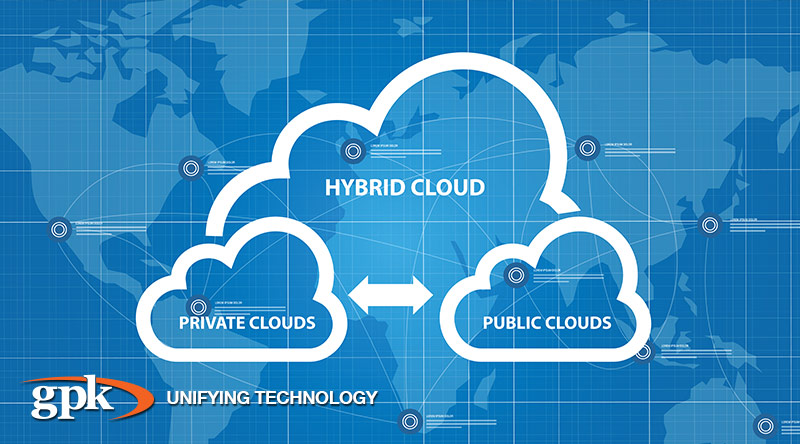
 

Public, Private or Hybrid – Which Cloud Is Right For You?

Though there is some debate over its origins and inventor, there’s no denying the extraordinary impact cloud technology has had on the way we do business. Companies of all sizes, across all industries, leverage its capabilities daily, to reach global markets, increase efficiency and reduce costs.

Yet despite its popularity, many business owners are unaware of the wide range of cloud options available, or indeed, whether their current cloud strategy is the best one for their business.

The primary benefits of a cloud-based system are threefold:

  1. Scalability – the capacity to expand or contract the size and type of services quickly according to need
  2. High uptime – constant monitoring, maintenance and sophisticated security minimise loss of service
  3. Cost efficiency – users only pay for the level of service they need at a given time

In contrast, key concerns about cloud-based systems include:

  1. Data sovereignty – data stored offshore is subject to the laws of that location, which may differ from those of the business and potentially expose privacy risks
  2. Control – sensitive information stored outside the confines of the company’s own systems creates uncertainty and a sense of vulnerability
  3. Customisation – shared systems have limited scope for tailoring to specific needs

Knowing your perspective on each of these key points is a great place to start when deciding which of the three cloud types – public, private and hybrid – will best meet your needs. Let’s look at each type in a little more detail:

Public cloud

Probably the best known type of cloud service, the public cloud is exactly as the name suggests: a service available to the general public, either on a pay per use or subscription basis. Hosted by a third party provider, it offers the convenience of high scalability and reliability, frequent improvements and new features, and needs little or no maintenance and management by the user.

These systems are great if uptime, accessibility and cost efficiency are a priority, and you don’t require high level customisation or to safeguard sensitive information. Some of the more familiar products available in the public cloud include Microsoft Azure and Amazon AWS.

Private cloud

Businesses in highly specialised industries, or that require top level control over system design and security may opt for a private cloud service. These are built on infrastructure you own which, depending on the provider and product, can be stored at your site or remotely and are only accessible to your company.

A private cloud enables you to fully customise the system to suit your precise requirements, providing superior quality and flexibility. Like the public cloud, it also enjoys high scalability and availability, but as with many bespoke product or services it can also be considerably more expensive than a public service as the overall cost is borne by one rather than multiple tenants.

Hybrid cloud

Sometimes the best solution is to leverage the advantages of both cloud types. Hybrid cloud is a service which combines the flexibility, economy and scalability of the public cloud with the security, privacy and customisability of a private cloud.

This suits a range of scenarios, including companies that:

  • Need to migrate gradually from legacy systems
  • Have both low security and highly sensitivity data and applications
  • Need flexibility to manage periods of peak demand
  • Operate highly latency sensitive applications
  • Need to balance innovation with compliance and cost efficiency4

As you can see, there are many things to consider when looking for your ideal cloud solution, and the benefits of cloud services can be enticing. But before you jump into any new system, it’s essential to thoroughly assess your current situation. This includes mapping out your existing network, determining your company’s approach to digital transformation and seeking the advice of a cloud services expert, so you can be sure of making the best changes for your long-term future. Like any core business function, technology implemented with good planning and a measured approach greatly increases your chances of success.

If change and meeting your customers’ needs is a constant, doing nothing isn’t an option. Be sure you are partnering with a company with the depth and breadth of expertise you require. Particularly one who can help you navigate end-to-end managed services, cloud, mobile and paperless office technology. GPK consultant, Ben Holian, is available for a no obligation discussion on how GPK can help you reduce operational costs, manage your IT footprint more effectively and create an exceptional experience for your customers. Contact: Phone 1300 000 475 or email info@gpkgroup.com.au for more information.

0%