
What Does the NBN Mean for You?

Since it was first announced in 2010 there’s been a swathe of publicity surrounding the rollout of Australia’s National Broadband Network (NBN). We’ve been presented with a variety of information, opinions and messages about its form, function and implementation. But in practical terms, what does the NBN mean for your business?

Put simply, the NBN is a Federal Government initiative that will change the way your business uses internet and landline phone services. Progressively introduced right across the country including metropolitan and rural areas, it’s an infrastructure upgrade aimed at providing more comprehensive – in some cases significantly faster – broadband coverage than ever before. Almost every business will eventually be connected to the NBN. The rollout is expected to be completed by 2020, at which point the vast majority of old phone and internet connections will be permanently switched off. So, if you haven’t already made the change, it’s time to start looking at your options!

The new infrastructure will draw upon a range of technologies including new fibre optic cable, existing copper lines, fixed wireless and satellite. The technology that’s available to you will depend on what’s currently available in your area and predicted demand – but in some cases, you may have further options according to the plan you choose and the connection speed you need.

NB. Before you start looking at plans, make sure you understand the speed required to consistently meet your business needs. Choosing a plan that promises speeds of up to 100Mbps might sound like the Rolls Royce of connections, but unless you have a large team or regularly download big files like video or high-resolution images, you’ll end up overpaying.

Once you know what speed you need, look at the technology options available. Here’s an overview:

Metropolitan Options

FTTN – Fibre to the Node

Around 50% of customers are expected to use FTTN. This option draws on a combination of new and existing technologies: the copper cabling you’re currently using for your landline phone and broadband, and a cabinet (known as a node) located in your street, or a street nearby.

The internet speed delivered by FTTN technology is highly dependent on distance – the closer you are to the node, the faster your connection will be. If your building is under 400 metres from the node, expect to achieve speeds of up to 100Mbps.

FTTP – Fibre to the Premises

This technology utilises only fibre optic cable to connect each premise directly to the node using its own dedicated line. Generally considered the best NBN connection, FTTP is not negatively affected by long distances and has the greatest potential for upload and download speed. It also provides lots of scope for future demand – making it a great option if your business is growing, or has consistently high data demands. FTTP is expected to be available in around 17-21% of buildings, with plans offering speeds of 12Mbps – 100Mbps.

FTTC – Fibre to the Curb

A new technology that sits somewhere between FTTP and FTTN, Fibre to the Curb (in some cases, Fibre to the Drive, or FTTD) utilises high speed fibre optic cable laid from the closest possible Distribution Point Unit (DPU) to your entrance or street frontage, then covers the remaining distance to your premises via the existing copper phone line. It provides better speeds (up to 100Mbps depending on your plan) than a copper only FTTN connection but is more efficient and cost-effective (due to fewer capital works and new fibre). It’s expected to be available to around 1.5 million premises.

HFC – Hybrid Fibre-Coaxial

This technology utilises the existing coaxial cable laid for Telstra or Optus Cable to connect your premises to the node. Depending on the plan you choose, and demand during peak usage hours, you can achieve speeds of up to 100Mbps. Due to changes at NBN aimed at improving network quality and reliability, there is expected to be a delay of several months in the rollout of HFC connections.

FTTB – Fibre to the Building/Basement

A common rollout in commercial buildings including shopping centres, FTTB connects fibre optic cable to a central communication point in the building, known as the Main Distribution Frame (MDF). Each business then connects to the MDF via existing copper lines or, in the case of more modern buildings, a faster ethernet network cable. According to the NBN, it has the potential to achieve speeds up to 600Mbps.

Rural and Remote Location Options

Fixed Wireless

Considered a crucial part of the NBN network for regional areas, fixed wireless uses an outdoor antenna installed on the roof of your building to receive 4G signals transmitted by new ground towers. To be effective, however, there must be a clear ‘line of sight’ between your antenna and the tower – any obstacles between the two points will interfere with the transmission and disrupt your connection.

Sky Muster Satellite

Where fixed wireless is not an option due to location, topography or cost, Sky Muster Satellite will provide broadband internet to some of the most remote areas of Australia. There will be two satellites working in tandem with a combined capacity of 135Gbps to connect around 400,000 customers. Known as Sky Muster and Sky Muster II, these satellites will receive internet signals from 10 ground stations and beam them to the dish on each premise, delivering speeds of up to 25Mbps depending on your plan.

Voice phone calls

If you operate in an urban area, the changeover to NBN will require all your voice calls to use VOIP (Voice over Internet Protocol). You’ll keep your existing landline number/s, but the old analogue phone signal will be converted to digital, transmitting your calls over the internet instead of through physical phone lines. For regional businesses, there will be no change to the current voice phone call service.

The advent of the internet may have changed the face of communications forever, but the NBN aims to meet this challenge head-on, giving more Australian businesses than ever the opportunity to connect and compete in a global marketplace. It’s a massive change to our national infrastructure, and one which deserves careful consideration – so you can be sure of understanding your options and applying a service that best fits your budget and business objectives, now and for the future.

If change and meeting your customers’ needs is a constant, doing nothing isn’t an option. Be sure you are partnering with a company with the depth and breadth of expertise you require. Particularly one who can help you navigate end-to-end managed services, cloud, mobile and paperless retail technology. GPK Retail consultant, Cordell Quaine, is available for a no-obligation discussion on how GPK can help you reduce operational costs, manage your IT footprint more effectively and create an exceptional experience for your customers. Contact: Phone 1300 000 475 or email info@gpkgroup.com.au for more information.

Microservices: An Agile Solution for Big Business?

Gone are the days when size trumped all. Today, businesses big and small are competing in a global market where the race to win customer loyalty is less about who’s best, and more about who best fits the individual.

In the drive to deliver more of this customisation, businesses are increasingly opting for cloud-based applications. But whilst this has greatly improved speed and efficacy, on its own it isn’t enough to deliver optimal efficiency or agility, particularly where the overall framework is large or complex.

Application development within many businesses has traditionally followed a monolithic approach. In this situation, the IT team develops and supports a single product, comprised of interconnected components that draw on one unit of code and share the same resources.

This approach has several advantages that have perpetuated its use, particularly for enterprise businesses. Most of all, it’s convenient. All components of the app are centralised and tightly coupled, so focus and resources are streamlined towards securing, managing and improving one product.

But the singularity of purpose in monolithic applications can also be a weakness. Scaling up is achievable but often slow, as new resources like servers must first be built. When changes do roll out, the whole system has to stop in order for them to be applied. And as it gets bigger, load time frequently gets slower.

In contrast, the microservices approach to system architecture is highly deconstructed and entirely cloud-based A relatively new development concept, microservice architecture functions as a suite of small, independent services which each play a unique role and work in combination to meet a specific business goal.

Loosely coupled and communicating over standard protocols, microservices can be easily adapted to suit changing business needs; individual tasks can be easily isolated and changed or fixed, without disrupting the overall system. In some cases, several microservices may be capable of performing the same tasks.

This scalability and resiliency offers a huge advantage to business, allowing it to keep moving forward with minimal downtime and demand on resources. It also provides greater agility to respond to opportunities, challenges and customer demands.

The modular nature and agility of microservices must however be managed carefully, with developers keeping sight of the business’s top line goals and objectives. Microservices are generally developed in relative isolation by small, independent teams, and may even be in different languages. Without strong project leads that can tie all the services together, the resulting disparate frameworks, long chains of API calls and overall lack of governance can create future complications for development and support.

There’s no denying the customer is king. And technology plays a central role in any organisation’s ability to remain competitive. But today, more than ever, technology must also be customer-centric. Companies of all sizes, from bootstrapped start-ups to multinationals like Amazon and eBay, are embracing this paradigm shift and adjusting their approach to development, to deliver a better service fit for the customer. Strategically project managed and with sights set on clearly defined business goals, microservices are a powerful and efficient way to manage application development in almost any business.

If change and meeting your customers’ needs is a constant, doing nothing isn’t an option. Be sure you are partnering with a company with the depth and breadth of expertise you require. Particularly one who can help you navigate end-to-end managed services, cloud, mobile and paperless office technology. GPK consultant, Ben Holian, is available for a no obligation discussion on how GPK can help you reduce operational costs, manage your IT footprint more effectively and create an exceptional experience for your customers. Contact: Phone 1300 000 475 or email info@gpkgroup.com.au for more information.

3RD Party Content: Microsoft shares tips on how to secure your identity against cybersecurity threats

https://youtu.be/BeX-imdxlxk

In this video, the Microsoft Cyber Defense Operations Center shares some best practices for protecting your information and privacy against cyberattacks and online threats, such as classifying information and then putting appropriate protections in place based on its value. Some information is meant to be public, some data is sensitive but not highly valued to outside entities, but some data is mission critical and/or could cause tremendous financial hardship if shared externally. This video shares some of the policies and practices that can be used to better protect information and data inside and outside of your operational perimeters.

Original Post: https://youtu.be/BeX-imdxlxk


Time spent wisely: How an MSP can help retailers get ahead

As the pace of business continues to accelerate and technology becomes ever-more entrenched in our day to day lives, the challenge for business owners is no longer just to be better, faster, stronger: it’s about being smarter and safer.

In particular, retail technology has evolved by leaps and bounds. Interactive, mobile and point-of-sale innovations have enabled retailers to discover deeper customer insights, improve service and lower trade boundaries.  But it has also become a disrupter, putting retailers under pressure to keep up with rapid change in the race to remain competitive. And where there’s pressure, there’s often a problem waiting to happen.

Many store owners strive to maintain their own IT systems. Fast implementation and cost saving are often the key drivers. But in reality, self-management of store technology is often not what the retailer does best, and it takes them away from more important, revenue related activities like sales and marketing. It can also put them at risk of cyber-crime due to network flaws, and compliance breaches caused by mishandled data.

Fortunately, there is a way to untangle the ravel of technology many retailers find themselves in. From in-store beacons that trigger push messages to customers’ smartphones to refrigeration systems and CCTV, a managed service provider (MSP) can streamline, integrate and secure the increasingly diverse range of systems used by today’s retailers.

Three key areas a managed service provider can help include:

  1. Compliance

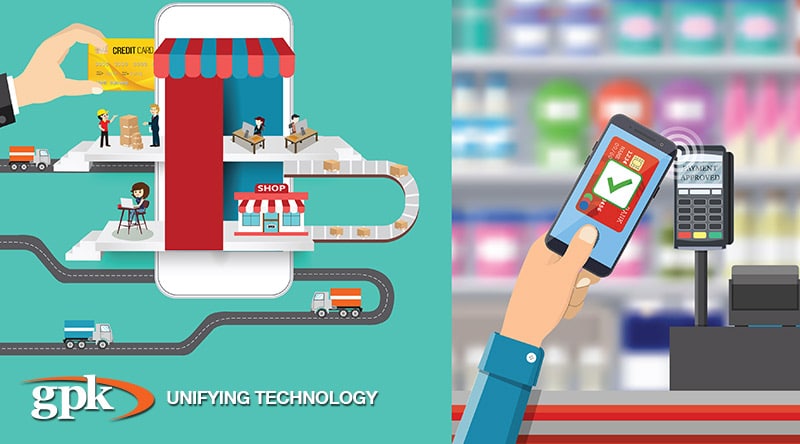
According to 2017 research by the Reserve Bank of Australia, cards now account for more than 60% of retail payments. This behavioral shift places a growing responsibility on the shoulders of retailers, who must adhere to strict Payment Card Industry (PCI) compliance requirements for handling, transfer, and storage of customer card data.

An MSP can provide peace of mind for retailers by establishing and maintaining secure systems and a robust backup process, including the right level of data encryption, to satisfy these requirements.

  1. Network security

The Internet of Things (IoT), whereby Wi-Fi capable devices are connected to the internet and to each other, has impacted retail in a big way – and it’s not likely to slow down! However, as retailers ‘bolt-on’ more systems and equipment to improve productivity, set smarter sales and marketing goals and enhance the customer experience, it becomes harder to preserve security and integrity.

A managed service provider can ensure the right combination of public (cloud) and private infrastructure and applications are implemented to provide flexibility and safety whilst also optimising data capture and integration.  Retailers can then extract more meaningful insights and save time previously spent double-handling data or worrying about system security.

  1. Different vendors

From produce scales to printers, registers to chicken rotisserie ovens, the diversity of smart devices now in retail stores also presents a challenge for retailers in managing many different vendors.

An MSP can provide an independent, expert review of current agreements, contractors, and vendors to ensure each is in the retailer’s best interests. They can also manage these relationships and if necessary, procure vendors and licenses that better fit the retailer’s needs, budget and business objectives.

The Internet of Things and our growing preference for cash-free purchasing is rapidly reshaping Australia’s retail environment. Retailers everywhere are taking their cue from consumers, embracing smarter tools and systems in the drive to deliver better service, reduce overheads and derive better data. But to leverage these tools and systems, whilst also satisfying customer expectations and staying secure and compliant is an onerous task – and one best left in the hands of an expert! Partnering with an MSP can help retailers reclaim valuable time, save money and maintain customer confidence whilst taking advantage of everything these exciting new technologies have to offer.

If change and meeting your customers’ needs is a constant, doing nothing isn’t an option. Be sure you are partnering with a company with the depth and breadth of expertise you require. Particularly one who can help you navigate end-to-end managed services, cloud, mobile and paperless retail technology. GPK Retail consultant, Cordell Quaine, is available for a no-obligation discussion on how GPK can help you reduce operational costs, manage your IT footprint more effectively and create an exceptional experience for your customers. Contact: Phone 1300 000 475 or email info@gpkretail.com.au for more information.

Public Cloud: The Good, the Bad and the Untrue

Internationally speaking, Australian business is considered ahead of the curve in our adoption of commercial cloud services. ABS research indicates that since 2014, the number of businesses using this technology has more than doubled. In many cases, however, this adoption is only skin deep. So, what’s holding us back in leveraging the capability of this growing technology?

We’ve talked before about some of the big benefits of integrating cloud services into your business. Scalability, cost efficiency, high availability, and uptime are advantages that need no further explanation. But there are other less visible benefits. There are also a few myths and confusion around how the cloud – and in particular, public cloud – really works.

Few business owners would disagree that today, agility is the name of the game. Cloud-based services meet this need head-on: services are available on an as-needed basis, enabling companies to pivot and innovate easier and faster, whilst optimising expenditure and staff resources.

Companies that resist or limit the implementation of cloud-based services cite a range of reasons. These include:

  1. Having to learn and maintain new tools

As with anything new, it takes a little while to adapt and learn the technology, but the learning curve is not as steep as you might think. In reality, most of us have been using cloud services in one form or another for more than a decade. And the majority of cloud services providers are only too happy to provide support! Maintenance is also faster, cheaper and simpler; your service provider becomes your remote IT team, keeping software and hardware updated, your system secure and eliminating the need for big-ticket asset purchases.

Moving away from static IT systems and adopting a cloud mentality allows companies to progressively build efficiency and scalability into their business. It lays the foundation for easily adding micro-services: sometimes an extra module or app is all that’s needed to take your business to the next level.

It also enables you to leverage the benefits of multiple public clouds. Today’s companies have a growing and diverse range of needs which require specialist service providers – so whilst it’s possible to use just one, your business will benefit more from using several providers, each with a richer level of expertise.

  1. Concerns about data sovereignty

Many business owners are already embracing the global marketplace. However, when it comes to the security and integrity of their data some worry that placing it in the public cloud and in particular, offshore storage and management, means handing over a little too much control.

These concerns are largely unfounded, as public cloud vendors must adhere to strict compliance regulations. They also utilise leading edge security tools and personnel to guard against hackers and other threats the average IT team would struggle to stay ahead of. Yes, the threats exist – but putting your data in the hands of an expert gives your business the best protection available.

This is not to say all responsibility rests on the shoulders of your cloud services vendor: companies should familiarise themselves with the international compliance laws and regulations in any country that houses their data. However, by doing their homework on the cloud services vendor engaged and putting a clear Service Level Agreement in place, business owners can guard against any unexpected breaches. And with migration tools now making it far simpler to change public cloud providers, they needn’t feel locked in if circumstances change.

  1. Heavy reliance on internet connectivity and speed

Moving your business to the public cloud does place a high reliance on your internet service to handle the workload. However, there are several steps your in-house IT team or managed service provider can take to optimise your network – including data prioritisation and WAN management – to ensure everyone has access to the data they need when they need it.

You might also like to consider a hybrid cloud solution such as Windows Azure, whereby some data is stored in the cloud and some at your site.

Along with these technical considerations, it’s also vital to review your ISP (Internet Service Provider) and implement a Service Level Agreement (SLA) to ensure a smooth transition and certainty around speed and connectivity.

Australian businesses are already benefiting from some of the best-known attributes of cloud-based services including cost efficiency, scalability, high uptime and security. Yet many hold back from fully leveraging its capabilities, fearing a loss of control or opening the door to compliance and security breaches. Nothing could be further from the truth. The public cloud is not without its risks – but the same can be said for any area of internet-based technology! Success in Australia’s competitive marketplace demands a cloud mentality – so explore your options. Today’s cloud services providers offer a plethora of specialised, secure and flexible options designed to help you grow your business.

If change and meeting your customers’ needs is a constant, doing nothing isn’t an option. Be sure you are partnering with a company with the depth and breadth of expertise you require. Particularly one who can help you navigate end-to-end managed services, cloud, mobile and paperless office technology. GPK consultant, Ben Holian, is available for a no obligation discussion on how GPK can help you reduce operational costs, manage your IT footprint more effectively and create an exceptional experience for your customers. Contact: Phone 1300 000 475 or email info@gpkgroup.com.au for more information.

HAPPY EASTER! Easter Holiday Hours of Operation

Happy Easter to one and all! We hope everyone has a safe and enjoyable long weekend with friends and family remembering what makes life worthwhile.

Due to the Easter break being Australian public holidays, we will be closed from 5 pm, Thursday 29th March until 9 am, Tuesday 3rd April.

PS: Watch out for rabbits flying paper airplanes, dropping chocolate eggs!

GPK Group in the Community: The Library Discovery Centre is a special place where the Story Dog’s program takes place on Fridays

The following article is a brief story of one of GPK Group’s sponsorship partners, Story Dogs from a local library that utilised their wonderful services.

The Library Discovery Centre is a special place where the Story Dog’s program takes place on Fridays.

Story Dogs (a not-for-profit organisation) was formed in 2009 in Murwillumbah, NSW by Leah Sheldon and Janine Sigley. Currently, Story Dogs assists over 1280 children at 154 schools with 258 volunteer dog teams.

We believe Story Dogs improves children’s and reading and communication skills by employing a powerful method – reading to a dog. But not just any dog. Story Dogs have accredited companion animals who volunteer with their owner/handler as a team, going to schools and libraries.

At St Catherine’s we have Meika, the 6-year old Golden Retriever, who visits our school every Friday. Meika belongs to one of our dedicated staff members, Mrs. Katrina O’Sullivan.

We are thrilled to have Meika working in our school and welcome her to the Library Discovery Centre. We would like to thank her sponsor GPK Group Pty Ltd.

In other Library news, the students are now getting into the routine of returning and borrowing books from our Library. It is important that students bring their Library bag each week to their session. These bags can be purchased at the uniform shop.

This year, the Library will be open at the first half of lunchtime on Mondays, Wednesdays, and Fridays. If you have any queries regarding the Library Discovery Centre please don’t hesitate to contact me.

Vanessa Jennings

————————————————————————————–

For more information on Story Dogs: Leah Sheldon and Janine Sigley formed the non-profit Story Dogs organisation in 2009 in Murwillumbah, NSW. Based on the successful American literacy program, Reading Education Assistance Dogs (R.E.A.D.), which was launched in 1999 in Utah, USA. R.E.A.D. was the first comprehensive literacy program built around the appealing idea of children and young adolescents reading to dogs.

Underpinning the objectives of our program is the knowledge that “students with reading difficulties find themselves in a cycle of almost unrelenting failure that ensures an ever-widening gap between them and fluent readers.” (Konza, 2006. p. 152).

Mobile Device Integration: the key to streamlining your business and a better customer experience

Today more than ever before, the customer is king. In the retail sector, e-commerce has risen to the challenge, leveraging mobile technology to offer speed, agility, and convenience. But the in-store experience is also evolving, as bricks and mortar retailers recognise the many opportunities this same technology affords both their staff and customers.

Choosing the right systems and devices for your store begins with understanding your customer and their growing preference for omnichannel shopping. For many, the buying journey has already begun before they visit your store, and the majority will enter the store with a smartphone in hand.

What they experience from this point forward is critical to your sales success.

Customers expect a digitally sophisticated experience. Research shows bricks and mortar stores that deliver a seamless online-offline experience enjoy a distinct advantage which directly benefits their bottom line: customers feel more engaged, making them willing to travel further to your store, pay higher prices and buy greater quantities.

It might be tempting at this point to focus on technology as the key to profitability. But what distinguishes you from e-commerce competitors, and can ultimately be used to your advantage is your ability to deliver this experience with the right balance of people and technology.

The solution? Mobile device integration.

Here are some areas of technology where integration can help you streamline your systems and devices to save time and money, and deliver a better customer experience:

Multipurpose devices

Rather than having a swathe of clever devices that perform individual tasks such as stocktake, markdowns, and compliance, choose multipurpose devices that perform several functions. A great example is 1D/2D scanners, which are capable of scanning two types of barcodes – so you can use just one scanner for multiple tasks including POS, loyalty cards, redemptions and marketing.

These scanners can be installed at the checkout and on phones and tablets used by floor staff, giving customers the convenience of making a purchase or obtaining product or promotion information directly on the shop floor, rather than waiting in line.

There is also a range of handheld devices available in a ‘rugged’ or hardwearing format, which can be useful if your store environment is particularly demanding or requires staff to carry the device for long periods.

Operating systems

Implementing a widely used operating system such as Android, which has a range of applications and plugins readily available through the Google Play store, gives you the flexibility to grow and adapt to your business needs and customer demand.

Android is compatible with Windows-based systems, so it can be used on a large range of devices. It’s open source, making it fast and economical for you to tailor the system to your unique needs. And its compatible with popular e-commerce sites such as Myfoodlink, helping you to streamline tasks like picking and stock control.

Wi-Fi

Wi-Fi is an integral part of the retail environment – not just as a convenience for customers doing in-store price comparison or product research, but to enable data sharing and syncing between live systems, access to remote support and to help staff provide responsive customer service face to face and via social media.

Today’s consumers have an abundance of information and resources at their fingertips. Digitally savvy and time poor, they have high expectations of retailers. But retailers can meet this challenge head on and leverage it to achieve better customer service and more sales by taking an integrated approach to in-store technology. With a combination of the right devices and tools, and a willingness to empowering staff to deliver on the spot solutions, retailers can satisfy their customers’ thirst for congruency and in return, enjoy long term growth, customer loyalty and success.

If change and meeting your customers’ needs is a constant, doing nothing isn’t an option. Be sure you are partnering with a company with the depth and breadth of expertise you require. Particularly one who can help you navigate end-to-end managed services, cloud, mobile and paperless retail technology. GPK Retail consultant, Cordell Quaine, is available for a no obligation discussion on how GPK can help you reduce operational costs, manage your IT footprint more effectively and create an exceptional experience for your customers. Contact: Phone 1300 000 475 or email info@gpkretail.com.au for more information.


Public, Private or Hybrid – Which Cloud Is Right For You?

Though there is some debate over its origins and inventor, there’s no denying the extraordinary impact cloud technology has had on the way we do business. Companies of all sizes, across all industries, leverage its capabilities daily, to reach global markets, increase efficiency and reduce costs.

Yet despite its popularity, many business owners are unaware of the wide range of cloud options available, or indeed, whether their current cloud strategy is the best one for their business.

The primary benefits of a cloud-based system are threefold:

  1. Scalability – the capacity to expand or contract the size and type of services quickly according to need
  2. High uptime – constant monitoring, maintenance and sophisticated security minimise loss of service
  3. Cost efficiency – users only pay for the level of service they need at a given time

In contrast, key concerns about cloud-based systems include:

  1. Data sovereignty – data stored offshore is subject to the laws of that location, which may differ from those of the business and potentially expose privacy risks
  2. Control – sensitive information stored outside the confines of the company’s own systems creates uncertainty and a sense of vulnerability
  3. Customisation – shared systems have limited scope for tailoring to specific needs

Knowing your perspective on each of these key points is a great place to start when deciding which of the three cloud types – public, private and hybrid – will best meet your needs. Let’s look at each type in a little more detail:

Public cloud

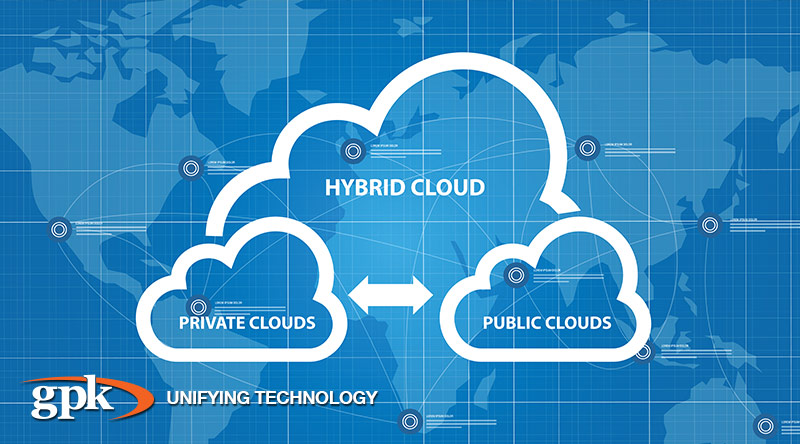
Probably the best known type of cloud service, the public cloud is exactly as the name suggests: a service available to the general public, either on a pay per use or subscription basis. Hosted by a third party provider, it offers the convenience of high scalability and reliability, frequent improvements and new features, and needs little or no maintenance and management by the user.

These systems are great if uptime, accessibility and cost efficiency are a priority, and you don’t require high level customisation or to safeguard sensitive information. Some of the more familiar products available in the public cloud include Microsoft Azure and Amazon AWS.

Private cloud

Businesses in highly specialised industries, or that require top level control over system design and security may opt for a private cloud service. These are built on infrastructure you own which, depending on the provider and product, can be stored at your site or remotely and are only accessible to your company.

A private cloud enables you to fully customise the system to suit your precise requirements, providing superior quality and flexibility. Like the public cloud, it also enjoys high scalability and availability, but as with many bespoke product or services it can also be considerably more expensive than a public service as the overall cost is borne by one rather than multiple tenants.

Hybrid cloud

Sometimes the best solution is to leverage the advantages of both cloud types. Hybrid cloud is a service which combines the flexibility, economy and scalability of the public cloud with the security, privacy and customisability of a private cloud.

This suits a range of scenarios, including companies that:

  • Need to migrate gradually from legacy systems
  • Have both low security and highly sensitivity data and applications
  • Need flexibility to manage periods of peak demand
  • Operate highly latency sensitive applications
  • Need to balance innovation with compliance and cost efficiency4

As you can see, there are many things to consider when looking for your ideal cloud solution, and the benefits of cloud services can be enticing. But before you jump into any new system, it’s essential to thoroughly assess your current situation. This includes mapping out your existing network, determining your company’s approach to digital transformation and seeking the advice of a cloud services expert, so you can be sure of making the best changes for your long-term future. Like any core business function, technology implemented with good planning and a measured approach greatly increases your chances of success.

If change and meeting your customers’ needs is a constant, doing nothing isn’t an option. Be sure you are partnering with a company with the depth and breadth of expertise you require. Particularly one who can help you navigate end-to-end managed services, cloud, mobile and paperless office technology. GPK consultant, Ben Holian, is available for a no obligation discussion on how GPK can help you reduce operational costs, manage your IT footprint more effectively and create an exceptional experience for your customers. Contact: Phone 1300 000 475 or email info@gpkgroup.com.au for more information.

CRN Australia: Melbourne’s GPK Group revealed as first Australian MSP to fire up Microsoft Azure Stack

Melbourne-based GPK Group has been revealed as the first IT service provider in Australia to implement its own Microsoft Azure Stack hybrid cloud.

GPK’s platform is based on Dell EMC Cloud for Azure Stack, which combines Dell EMC’s hyper-converged infrastructure with the vendor’s own networking, backup and encryption, as well as Microsoft’s app development tools. Dell EMC brought its PowerEdge 14th-generation servers to Azure Stack in November last year.

Read more:

https://www.crn.com.au/news/melbournes-gpk-group-revealed-as-first-australian-msp-to-fire-up-microsoft-azure-stack-480918

0%