Working remotely? Well, lets focus on the right tools

Working remotely? Well, lets focus on the right tools

Let’s face it, for a lot of us that have been working remotely there has been a bit of trial and error in getting our systems right.
For most of us the software and platforms that we use daily have greatly aided in the transition.
However some of the smaller building blocks of our remote setups can cause some mighty big problems.

Conferencing hardware… we are all using it.
A headset, a microphone and a video camera. Such simple devices and yet sometimes… sometimes they can lead to some pretty big frustrations. We know, our support crew have heard your frustrations.

And that is why we at GPK have put together our picks for your remote office / conferencing requirements.
We’ve put together some packages from market leaders Jabra and Logitech that we think could serve you well now and in the future.

All our communications bundles are fit for purpose, are perfect for working remotely, play nicely with collaboration software and are perfect for video conferences. Having the right voice and video conferencing equipment is step in the right direction.

Premium Wireless Headset Bundle

Jabra Evolve2 85 Stereo Headset
Engineered to keep you focused. The best headset for concentration and collaboration.

Logitech Brio
4K ultra high-def camera offers 5x digital zoom, high frame rates, outstanding low-light performance

Wireless Headset Bundle

Jabra Evolve2 65 Stereo Headset
Engineered to keep you agile. Work anywhere with superior wireless audio performance.Logitech C930e
Designed for business, a 1080p webcam with wide field of view and digital zoom

Wired Headset Bundle

Jabra Evolve2 40 Stereo Headset
Engineered to keep you on task. Exceptional audio, outstanding noise isolation, superior comfort.

Logitech C930e
Designed for business, a 1080p webcam with wide field of view and digital zoom

3 Key Ways Hardware-As-A-Service Helps Your Business

To succeed in today’s technology driven world, Australian businesses are increasingly compelled to improve operational efficiency and over-deliver on value in order to secure a competitive advantage. No matter what size the business, the IT function plays a pivotal role in achieving this. But often the very technology that drives operations is also one of its greatest drains on financial and human resources.

Cloud services are increasingly providing a solution to this problem. Most of us have already embraced the technology with Software-As-A-Service (SAAS) to perform a myriad of everyday functions like accounts (eg. Xero), email (eg. Gmail) and entertainment (eg. Netflix).

Hardware-As-A-Service (HAAS) takes this efficiency, flexibility and cost effectiveness to the next level. HAAS is a subscription-based service that fulfills your IT hardware, software and maintenance needs without the need to buy equipment or for substantial time to be invested by your in-house IT staff. Essentially, HAAS turns your IT hardware needs into a service expense. It enables businesses to leverage the latest technology to enhance important business functions without worrying about upgrades, purchases and technical issues.

There are many Hardware-As-A-Service options available, however the most common ones employed by business owners today include routers, telephone systems and mobile phones (where there is a rent to buy agreement). Popular devices such as Microsoft Surface have also recently been made available for rent under a HAAS model. Along with greater operational efficiency, there are several strategic benefits to moving your business from traditional on-site hardware to Hardware-As-A-Service. These include:

  1. Scalability – Hardware-As-A-Service enables your business to rapidly expand or contract hardware, software and maintenance according to your fluctuating needs – greatly reducing operating, consumables and depreciation expenses. It also allows you to reduce inefficiencies caused by outdated technology and take advantage of the latest offerings as soon as they become available – without any capital outlay or assigning resources to implement upgrades.
  1. Agility – The ability to respond quickly to new opportunities is a hallmark of being competitive. HAAS allows you to adjust your IT resources to meet these opportunities and redeploy management and staff to where they can provide the greatest benefit. It also increases the agility of internal processes by streamlining workflows and development cycles, reducing process complexity and centralising IT infrastructure – which not only delivers internal benefits but can also improve service responsiveness, leading to greater customer satisfaction
  1. Security – As more and more business is taken online, many business owners now face rising cyber security risks that threaten not only day-to-day operability, but intellectual property, confidential customer information and financial assets

HAAS gives you the confidence of knowing that your IT operations are monitored and protected around the clock by experts with the latest systems, so that downtime is minimised. This confidence also extends to your network of current and prospective business partners and suppliers. Leaders and decision makers are increasingly prioritising relationships with businesses that have sound, sustainable IT security systems in place.

To improve performance and stay ahead of the competition in an increasingly technology driven world, business owners must constantly innovate – seeking out ways to streamline core functions, lower overheads and maximise staff resources. Hardware-As-A-Service offers a powerful way to optimise a critical component of business operations – their IT function. By leveraging the flexibility, cost efficiency and responsiveness of HAAS, businesses can achieve a distinct advantage – one that provides immediate operational benefits, but also helps build a sustainable business.

If change and meeting your customers’ needs is a constant, doing nothing isn’t an option. Be sure you are partnering with a company with the depth and breadth of expertise you require. Particularly one who can help you navigate end-to-end managed services, cloud, mobile and paperless office technology. GPK consultant, Ben Holian, is available for a no obligation discussion on how GPK can help you reduce operational costs, manage your IT footprint more effectively and create an exceptional experience for your customers. Contact: Phone 1300 000 475 or email info@gpkgroup.com.au for more information.

How Secure Are You? 6 Tips To Make Your POS Safe

Technology adds value to our business world in many ways, helping us work smarter, faster and more efficiently than ever before. It arms retailers incredible customer insights to drive marketing activities, streamlines inventory and stock control and helps optimise staff resources and service delivery. But as retailers embrace all the capabilities today’s point of sale (POS) technology offers, they may also open the door to cyber crimes that could stall or completely disable their business.

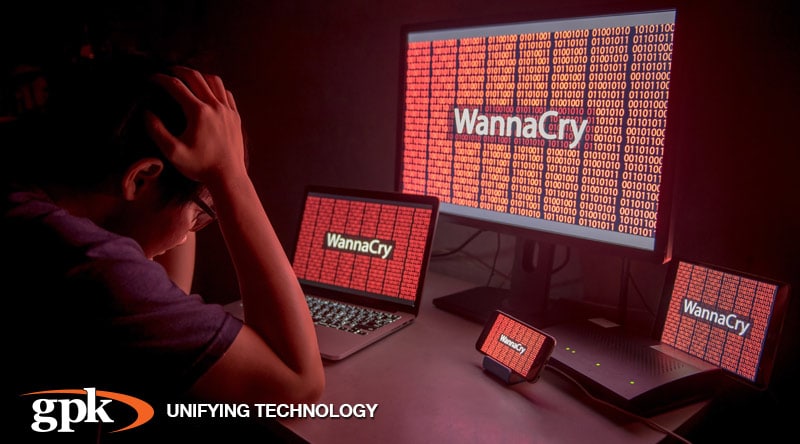
Cyber crime comes in many forms including phishing, system attacks and identity theft. But one of the most widely publicised is ransomware, a type of malware or malicious software designed to lock down or block access to your system until you pay a large amount of money. In May 2017 many retail POS systems were immobilised by the ‘WannaCry’ ransomware, which hit over 230,000 users in 150 countries worldwide. Ransomware like Wannacry can find its way into your POS in several ways, most commonly via a phishing email, infected website or malicious internet ad.

Retailers frequently protect their back-of-house computer systems with firewalls and antivirus software, but fail to apply the same safeguards to point of sale systems and the broader store network – potentially exposing sensitive company information, customer credit card data and personal details to cyber criminals.

The good news is that in addition to installing anti-virus software on your POS, there are a range of steps retailers can take to protect their business. Here are our top 6 tips for keeping your POS safe:

  1. Backup! Backup! Backup!

No matter what the type of data, back everything up regularly and make it a non-negotiable part of your store’s IT routine. Apply the same rule to every device from desktop computers and laptops to tablets and mobile phones, as they’re all susceptible to cyber attack.

If your data is backed up in the cloud, always log out of the cloud at the end of your session. If you are backing up to an external drive, make sure it’s unplugged to prevent hackers encrypting and locking your back up.

2. Isolate POS From The Network

Cyber criminals will often target your POS as a way to gain access to sensitive data stored in other parts of your network. Even with security measures in place your POS may still be vulnerable, so it’s essential to mitigate the risk to your broader business by keeping all credit card transactions contained to that one system and isolating it from the rest of the network with a firewall.

3. Keep Security Updated

Always install the latest POS software updates as soon as they become available. These updates often incorporate security patches designed to fix a weakness in the software that might expose you to attack.

It’s also vital to have a strong password different from the factory-set password used when the software was installed, which a hacker could easily find online. Change the password regularly and use at least 12 characters including numbers, upper and lower case letters and symbols.

4. Don’t Touch Anything Unfamiliar

One of the most common ways ransomware or other malware can enter your POS system is when a user clicks a link within a phishing email.

Avoid opening or downloading anything unfamiliar including attachments, text messages and apps. Hackers are becoming increasingly clever at imitating genuine content like password reminders or requests to update information so be on high alert and if in doubt, contact the organisation directly to verify the request.

5. Avoid Internet Browsing on POS

Like phishing emails, unsafe websites and malicious online ads put you just a click away from infecting the POS with a virus or malware. Many infections result from human error, particularly if a customer asks a user to look up additional information, or the user takes advantage of a quiet moment in trade to check their personal emails. As a general rule, any system that accepts credit card payments should not be used for internet browsing and vice versa.

6. Get Reputable IT Support

Even with dedicated internal IT resources, it can be challenging for retailers to keep their POS system secure.  Having a third party IT specialist who can monitor your system full time is essential to keep your business safe.

If your POS system is infected, your IT specialist can step in to mitigate the damage and manage the repair process for you, leaving you free to focus on other areas of your business.

Today, POS technology enables retailers to serve their customers more efficiently and effectively than ever before. But like any technology, it also requires stringent security measures to keep business and customer data safe. Making the security of your POS system a priority will help you avoid costly downtime and the potentially devastating effects of fraud, identity theft and other cyber crimes.

If change and meeting your customers’ needs is a constant, doing nothing isn’t an option.  Be sure you are partnering with a company with the depth and breadth of expertise you require. Particularly one who can help you navigate end-to-end managed services, cloud, mobile and paperless retail technology. GPK Retail consultant, Cordell Quaine, is available for a no obligation discussion on how GPK can help you reduce operational costs, manage your IT footprint more effectively and create an exceptional experience for your customers. Contact: Phone 1300 000 475 or email info@gpkretail.com.au for more information.

3 Key Benefits of Mobile Payments

Today’s retailer faces a rate of change that is unprecedented. Franchises and independent stores vie for the business of increasingly tech savvy and time poor consumers. At the same time, storeowners and managers must stay abreast of local and international trends in order to compete in a global marketplace.

Maintaining a competitive advantage in today’s marketplace demands innovation. One of the best, yet largely untapped opportunities for retailers to boost operational efficiency and create a point of difference with their customer is at point of sale (POS).

Checkout is a pivotal part of your business. For business owners and managers, a smooth POS process means more transactions, better utilisation of staff resources and greater security. For customers it means convenience, efficiency and peace of mind.

So how can you provide a seamless solution for both store and customer? The answer lies in your customer’s pocket.

Most of us are familiar with contactless payment or ‘Tap and Go’ facilities, where a transaction is completed without pressing buttons or entering a PIN. These generally involve the customer waving a credit or smart card over the point of sale scanner, which reads a chip inside the card in order to processes the transaction. This card technology is quick and convenient, but it’s limited to small transactions, can expose traders and customers to fraud due to lack of authentication and requires close proximity between the card and scanner.

Thanks to smartphone technology, there’s now a better way – mobile payments.

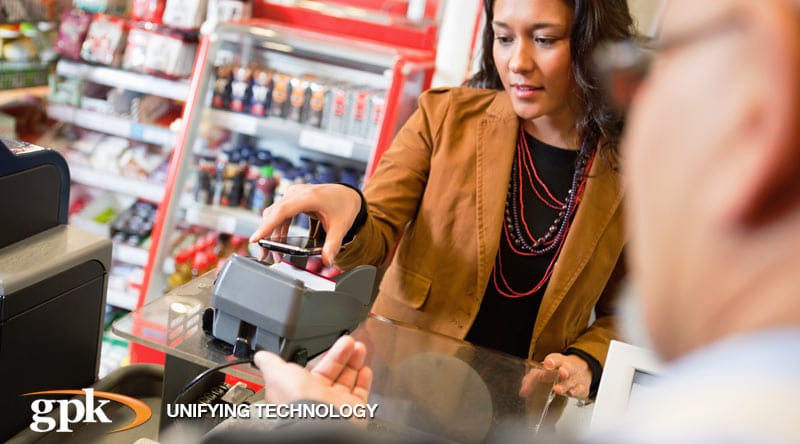
Apple and Google, the two biggest players in today’s smartphone marketplace each have a mobile payment and digital wallet system that leverages cellular and WiFi technology to deliver a smooth, highly secure and convenient point of sale experience. Both ApplePay and Android Pay systems are user-friendly, allowing customers to make payments as easily as they would with a ‘tap and go’ card by simply holding their phone over the point of sale scanner.

More and more consumers are opting to carry their smartphone instead of traditional cards and cash, especially Millennials, for whom smartphone technology is as essential as breathing! According to a 2017 study, they are 16 times more likely to use a digital wallet than their Baby Boomer grandparents, and also more likely to vote with their feet if a retailer doesn’t include this in their payment options.

Smartphone technology alone is not enough to create an advantage in Australia’s highly competitive retail marketplace. But stores that deliver greater convenience and efficiency and make it easier to buy by expanding their service to include new technologies like mobile payment are increasingly winning the war for customers. International research predicts mobile payments will contribute over $1 trillion in worldwide retail sales by the end of 2017.

Contactless POS options including ‘tap and go’ cards and mobile payments also encourage customers to spend more, simply due the ease of transactions. Studies into purchase behaviour following the introduction of ‘tap and go’ cards have shown overall spend to be universally higher, in some cases by as much as 30%, regardless of previous spending habits.

Mobile payment systems can be readily integrated into any POS system that already has a contactless payment facility and reliable mobile connectivity. But mobile payments also have several other benefits beyond those of traditional card-based contactless payment systems that add value to your current service offering. These include:

  1. Speed – In an age where every second a customer is kept waiting can cost you a sale, the speed of processing offered by mobile payments provides a small but compelling advantage, cutting several seconds off transaction processing time.
  2. Security – Mobile payments provide a security buffer between your point of sale system and the customer’s credit or debit card, greatly reducing the risk of card fraud. Both ApplePay and Android Pay employ sophisticated encryption and identification technology that allows payment authorisation without revealing the customer’s account details. Even if your POS system is affected by malware, the customer’s payment information stays safe.
  3. Flexibility – Mobile payment technology can also be integrated with other point of sale functions such as loyalty programs. This allows transaction information to be shared across systems, resulting in more meaningful behavioural data to assist operational decision making.

As competition in Australia’s retail marketplace intensifies, companies are increasingly looking to technology to help optimise business systems and processes, lower costs and increase sales. And today, there is a fourth crucial element to retail success: the customer.

Mobile payments are still a relatively new concept for many retailers and consumers, but the desire for a user-friendly, secure and efficient point of sale experience is universal. Partnering with a POS expert who can help you innovate by incorporating these new technologies into your existing service will not only create a more customer-centric experience and make them more likely to buy from you, but also differentiate you from competitors and help you achieve greater operational efficiency.

If change and meeting your customers’ needs is a constant, doing nothing isn’t an option. Be sure you are partnering with a company with the depth and breadth of expertise you require. Particularly one who can help you navigate end-to-end managed services, cloud, mobile and paperless retail technology. GPK Retail consultant, Cordell Quaine, is available for a no obligation discussion on how GPK can help you reduce operational costs, manage your IT footprint more effectively and create an exceptional experience for your customers. Contact: Phone 1300 000 475 or email info@gpkretail.com.au for more information.


0%